Pages

Friday, August 29, 2014

Love in a Macchiato


The chain reaction began at 7 a.m. with a caramel macchiato. 

Last Wednesday morning, a woman in St. Petersburg, Florida drove through a Starbucks, paid for her drink, and then in a random act of kindness paid for the drink of the person behind her. That person in turn paid for the person behind them, and so on, and so on.

Vu Nguyen, the barista working the drive-through window, was amazed at what was happening, so he began keeping a tally on a piece of paper. As customers pulled up to the window to pay after ordering Nguyen would smile and explain that their drink had been paid for by the person in front of them, and asked if they wanted to do the same for the next in line.

And so it went for eleven straight hours

By 6 p.m., 368 people had paid it forward. Tim Burnside, who had driven through that morning, came back later in the day to see if the chain was still going. When he discovered that it was, he ordered a second chai tea just so he could participate again. “It’s just nice to do a random act of kindness for someone you don’t know,” he said.

It’s incredible - that first small act of kindness turned into a mini-movement. I wonder if the woman even knew what she had done until she read the news the next day. She probably was surprised to learn that her actions had such far-reaching effects.

It’s so easy to underestimate ourselves, thinking that our simple acts of love won’t have much impact on the lives of others. So we tend to second-guess ourselves and, many times, end of up blowing it off.  Should I call that friend and encourage them? Does it matter whether I take a meal to one who is ill or lonely?  Will giving my neighbor a Bible really make a difference?

In reality, our seemingly small acts of love can have a huge effect in the lives of others. In fact, God tells us that the greatest commandment is to love our neighbor as ourselves. That is our highest calling, our greatest purpose. 

And as this story demonstrates, God can use our acts of love and kindness to catalyze a chain reaction that affects others. For when we love another, we are also teaching them how to love.  So our example creates a ripple effect that will go on and on.

As Mother Teresa said, “We can do no great things. Only small things in great love.” 


Thursday, August 14, 2014

Life Lessons from the Homeless

The Corner
Photo credit: Elisabeth Jordan

My friend Elisabeth has dedicated her life to helping the homeless. Several times a week she goes to a place she affectionately calls “the Corner” – an intersection in the area just south of downtown Dallas that is one of the most poverty-stricken areas in the nation – and cares for the material, emotional, and spiritual needs of the homeless men and women there.
 
Elisabeth and her homeless friends
Photo credit: Elisabeth Jordan

Recently she invited me to join her, so I ventured down to the Corner to hang out with her and some of her homeless friends.  I did my best to jump right in, mingling with the men and women scattered about, some seeking shelter under the cool shade of a tree, others lined up in the blazing sun awaiting entrance to the shelter they would call home for the night.  I struck up conversations with a few and they shared their stories with me:

  • One man told me he had been on the street for years, proudly showing me his homemade mattress made out of plastic grocery bags woven together;


  • Another man with the kindest eyes I’ve ever seen shared that he’s trying to overcome an addiction of 23 years;


  • And another pleaded with me to call the mayor on his behalf certain that if I could just talk to him the issue of homelessness could be solved.


As I stood there listening to each man’s story, I earnestly wanted to help, yet felt so helpless. I wished I could offer practical solutions and words of advice that would fix their problems, but I had none. I wished I had my checkbook with me so I could buy them what they needed, but I had left it at home. I wish I knew the mayor, but I didn’t. Instead, I was standing there utterly empty handed. I had nothing to give but myself…which felt woefully inadequate.

Lord, how am I supposed to help these people? I was at a loss. In fact, part of me wanted to bolt. I wanted to make up some lame excuse about how I needed to be somewhere and leave so they wouldn’t discover that I was a fraud, useless to them, of no help at all.

But, I didn’t bolt. I stayed.

Instead, I did the only thing I knew to do: be present with them. I offered to hold the man’s grocery-bag mattress while he ate a sandwich. “Don’t set it down, someone will take it!” he pleaded with me, so I stood there, making sure he saw me holding it tight while he ate. Then I held the hand of the man with the kind eyes as he told me of his addiction and his dependence upon God to help him overcome it. I listened and nodded and cried, and shared how I needed to depend on God for help, too.

All I had to give them was myself – my attention, my compassion and love. But, oddly, somehow that felt like enough. In fact, it felt like everything. As I looked in their eyes as we talked about our lives, our families, our joys and sorrows, there was a connection. We were relating deeply, authentically, the way human beings are designed to. It was enough. I was enough.

Sure, it would have been helpful if I could have given them something tangible. After all, Jesus himself was full of practical help. He healed. He delivered. He gave people fishes and loaves. He was - and is - the God of provision.

But isn’t it true that the Lord is also the God of presence? After all, when God introduced Himself to Moses at the burning bush, He called Himself simply, “I Am.” In that moment, it seems, His being present with Moses, relating with him, meant everything.

As people made in God’s image, maybe there are times when we are to be people of provision, and other times when we are to be people of presence. Although meeting material needs is important, maybe there are times where just being there, meeting needs of the soul, is of equal importance.

I had asked the Lord how to help these people, and in the process I was the one who was helped. As I climbed into my car and drove away from the Corner, I felt fulfilled, whole, and useful.  I hope I ministered to those men, but I know they ministered to me. They showed me that I am enough.

--
Read more about the great work Elisabeth is doing for the homeless at her blog site, "Bridge for Good," by clicking on the link below:


Thursday, August 7, 2014

The Good Doctor

Dr. Kent Brantly & his wife Amber
(Photo credit: Samaritan's Purse)
No doubt you have been following the story of Dr. Kent Brantly, one of two medical missionaries who recently contracted the deadly Ebola virus while in Liberia. He was transported to Emory University Hospital in Atlanta last week and, thanks to the efficacy of an experimental serum, has shown great improvement with each passing day.
Brantly’s wife, Amber, said in a statement that she is “rejoicing” that he’s better and is grateful for the prayers of so many. Christian leaders such as Franklin Graham and Greg Laurie have expressed their relief at his improvement and urged people to continue praying for his full recovery.
Unfortunately Brantly is not without his critics. Some like Ann Coulter are angry that his treatment is costing his sending agency more money than the medical services he rendered. Others are questioning his wisdom in going to Liberia in the first place, saying it was foolish to put himself and his family in harm's way by treating such seriously ill patients.

Do the critics have a point? Should Brantly have been more careful with his life?

Interestingly, Brantly had already addressed that question long before he became ill. Before he left for Africa, he shared his perspective in a sermon at his home church:

“God has a call on my life. And He has used relationships and experiences in His church to clarify, to strengthen, to confirm, to affirm, and to reconfirm that calling.
…I have no doubt, no hesitation, that He has called me to be a full-time medical missionary. And as I dream about what that will look like in the years to come, my heart leaps with excitement and joy knowing that He has called me.”

Calling. Every one of us has one. But what does that mean? I like this definition: “God’s personal invitation for me to work on His agenda using the talents I’ve been given in ways that are eternally significant.” (Thomas Addington and Stephen Graves, A Case for Calling) So the nature of a calling is that it is initiated by God. God calls; we respond. In fact, He has had our callings waiting for us since before we were even born! Because Brantly understood this concept, he felt confident that it was God who initiated the assignment in Africa, and not going willy-nilly into a dangerous situation. He felt God had confirmed his calling over many years and through many godly people.

Brantly’s story also demonstrates that there are other voices calling us – temporal voices, contrarian voices - telling us why our callings are neither practical, logical, safe, nor financially sound.

We should pay them no heed.

Instead, we should listen to the One who knows each of us by name and who created us with a purpose in mind. We should listen also to those who affirm the call on our life, who will pray for us and stand with us when the going gets tough.

I love how Brantly said that his calling, though fraught with danger, made his heart leap with excitement and joy. Are you experiencing joy and excitement in your life? If not, maybe you have yet to discover your true calling. Ask the Lord to show you, and then hold on for the ride!

You can hear more of Brantly in his own words in this moving video:


Thursday, July 31, 2014

What Legalizing Marijuana Teaches Me About Christian Liberty


I am writing this post from beautiful southern Colorado where I spend a week every year with my husband's family. This is the first time I've been here since the state legalized marijuana last year, and it's kind of weird to think that I could just go to a store and buy pot if I wanted to. It's hard for me to get my head around the fact that something I have always categorized as "bad" and "dangerous" is now considered normal, natural, and completely legal.

I've never done a drug in my life - for lots of reasons, a big one being I didn't want to break the law. So, now that the law prohibiting its use in Colorado has been abolished, it got me thinking (hypothetically, I assure you), why wouldn't I try it while I'm here? I mean, since I'm legally free to do it, what's the big deal?

Well, for one thing, there are serious health issues to consider. You are four times more likely to have a heart attack in the hour after smoking marijuana. Pot smoke is 50-70% more carcinogenic than tobacco smoke. THC has been linked to greater incidences of psychosis, depression and anxiety. So there's that.

Furthermore, I wouldn't want to upset my husband, since he would be opposed to the idea, or set a bad example for my nieces who are here with us. I wouldn't want to get behind the wheel and endanger others on the road. So there are social ramifications to consider, as well.

Here's my point: Even though it is completely legal for me to smoke pot in Colorado, I still choose not to because it's not beneficial for me to do so.

And therein lies the theological principle.

God's Word says we have been released from the Old Testament law with all its rules and regulations because Jesus set us free. Now, incredibly, all things are permissible for us. (Romans 7:6, 1 Cor. 6:12)  However, just because we are free to do what we want doesn't mean that everything is good for us. 1 Corinthians 6:12 in the Amplified Bible nails it,

“Everything is permissible (allowable and lawful) for me; but not all things are helpful (good for me to do, expedient and profitable when considered with other things). Everything is lawful for me, but I will not become the slave of anything or be brought under it power.” 

Even though we are no longer under the Law and are permitted to do all things, it doesn’t mean that we should. Just like smoking pot would be bad for me, sinful behavior is detrimental to our spiritual lives and can lead to devastating consequences.

When we truly understand what Christian liberty means, our motivation changes. Our obedience becomes an expression of our love for God, not just a legalistic obligation. Remember Jesus' words in Matthew? He said that the two greatest commandments were to 1) love God with all your heart, soul, mind, and strength, and 2) to love our neighbor as ourselves. In fact, he said that all the laws hang on these two commandments. As U2 put it, "Love is the higher law."

If we are seeking to live lives of freedom from the law yet obedient to Christ, the best rule of thumb is to ask yourself, "Is what I'm doing the best way to love God, others, and myself?"


Thursday, July 24, 2014

Besieged


Israeli soldiers at Gaza border on July 23rd
photo credit: Mendy Henchman/Flash90
 Today is the 17th day of fighting between Israel and Hamas. Israel continues to bombard the Gaza Strip in hopes of halting rocket fire and destroying a network of tunnels used by Hamas to smuggle weapons into Israel. Meanwhile, the death toll rises on both sides.

As I read the news, what strikes me about Israel is their unwavering courage. They stand and fight for their land while surrounded by nations who want to wipe them off the face of the earth. I am inspired because, like Israel, I fight battles of my own.

The bombardment I endure is of a different nature than that of Israel. The weapons threatening me are not missiles or tunnels; yet they take their best shot at me and attempt to burrow their way into my soul:

Discouragement.
Disappointment.
Hopelessness.
Regret.

Like emotional terrorists, these enemies attack without warning and without mercy. As I feel them closing in on me I cower in fear. I retreat, withdrawing from the world, and try to hide myself in a cave of isolation. But then I hear the Lord calling to me,

Get up, my child. Get up and fight.

Reluctantly, tentatively, I get up off the floor, reach for my sword and begin reading. The words are written about Israel but they are mine to claim as well:
  • “’For I know the plans I have for you,’ declares the Lord, ‘plans to prosper you and not to harm you, plans to give you hope and a future.’” Jeremiah 29:11

  • “You will arise and have compassion on Zion, for it is time to show favor to her; the appointed time has come.” Psalm 102:13
  • “You are awesome, O God, in your sanctuary; the God of Israel gives power and strength to his people.” Psalm 68:35
  • “…no weapon formed against you shall prosper…” Isaiah 54:17


I feel new strength begin to arise in me. But it’s not my own strength, for that was exhausted long ago. This is something coming from outside myself, or more accurately, from a place deep within me yet is not me. It is the same strength that raised Jesus from the dead and the same strength that has protected the Jewish people for the last 4000 years. 

It is the Lord Himself.

And I remember that – like Israel - I am not alone in my battle. There is One who fights with me and for me. I have a God who is bigger than my enemies. He wants my soul to prosper and gain victory over the things with which I am contending.

But the story gets even better. My victories are not just for my benefit, and neither are Israel’s. They are a sign to the world that our God is big and powerful and faithful. They are an invitation for the whole world to get to know the God who saves. Indeed, at the cross all men – Palestinian and Israeli, Jew and Gentile - are invited to discover the salvation found in Jesus Christ, and in doing so to become one holy people.

What about you? Are you in the midst of a battle? Look to the promises written for you in God’s Word, and arise in new strength. Watch as the Lord makes you a sign of His faithfulness to those around you.


Thursday, July 17, 2014

Conclusion: Talkin Bout My Generation

Well, hopefully you’ve enjoyed our tour of the generations. Every generation is unique, and it’s fun to see what makes each one tick.

Over the past few weeks, we identified how the spiritual climate has changed in America in the last three quarters of a century. Whereas two generations ago our country could be defined as a Christian nation, today we have completed a change that re-categorizes us as decidedly post-Christian.


So where does that leave us today?


I firmly believe that this is not the end of the story for the American church, for God is always superintending history to ensure the furtherance of the gospel. As I theorized in my post, “The 500-year Pattern of Reformation,” twice a millennium God endows His people with the unique purpose of re-forming the church.* If this is true, then the transition we are experiencing in our nation is no accident -- the time of reformation is now, and we are the people!
Icon by http://dryicons.com


In fact, all of us – from Silents to Millennials – have strongpoints that can be used as building blocks for the vibrant church of the future:


  • Millennials, it’s no coincidence that God has created you – a generation who wants nothing more than to transform the world around them – and placed you perfectly in history in a time of reformation. You have the vision and the drive to start movements that change lives. In fact, sociologists are calling you the Next Greatest Generation because you are exhibiting some of the same altruistic characteristics of the GI generation. We need you to lead us into this new era with your optimism and authenticity. 

  • Generation X, many of us are primed and ready for the reformation. Like Millennials, we are more concerned with organic relationships than institutional loyalty. We are tired of what we consider to be commercialization and programmatic thinking. We are ready to deepen our relationships with God and with other believers.

  • Boomers, since you love to reinvent everything in your path, experts are predicting that you will be at the forefront of ushering in this new movement. Many of you are becoming bored with the institutional church, and that itch to revolutionize is kicking in. What a perfect setup for you to help lead the way forward for the rest of us.

  • Silent Generation, you have the knowledge and wisdom that comes from having grown up in churches with solid Biblical doctrine that can be passed on to the younger generations. You understand the foundational truths of the gospel: the deity of Christ and the authority of Scripture. As the most Biblically literate generation, you have the opportunity to transmit these foundational truths to the rest of us. As I talk to Millennials, a theme I hear over and over is that they want to be discipled, and so you may be a perfect fit for that desire. 


Of course, I’m just scratching the surface as to what is possible. My hope is that an inter-generational dialogue will begin in our nation, one where we explore more fully what each of our contributions might be.


As generations partnering together, we are building the church of the next 500 years. It is time for change, and the change is worth celebrating. It’s an exciting time to be alive!


Thursday, July 10, 2014

Talkin Bout My Generation: The GI Generation


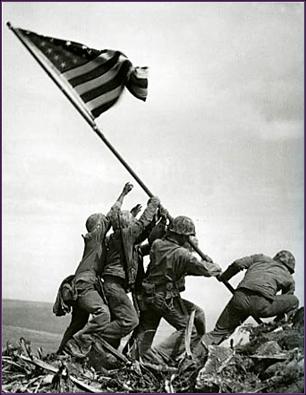
This week we take a look at the final generation in our series, The GI Generation, born between 1901 and 1924. As their name implies, they were the brave men and women who served during World War II (GI stands for “Government Issue”) and prior to that struggled through the hardships of the Great Depression. Both of these events profoundly impacted them. The difficulties they experienced brought them together and gave them a collective outlook that said, “I’ve got your back and you’ve got mine.” They valued working toward the greater common good, even if it meant having to give up their personal comfort in the process. They viewed hard work as a privilege and were extremely loyal to their families and employers. Because of their incredible selflessness, Tom Brokaw famously dubbed them “the Greatest Generation.”


Under the GI’s strong leadership, post-war America was re-built into a gleaming modern superpower. It was the GI Generation that built the Empire State Building, the Hoover Dam, and the Golden Gate Bridge. They led the way in winning the Cold War and putting a man on the moon. They ushered in a time of unprecedented economic prosperity known as the Golden Age of Capitalism, which allowed for the security and comfort of the Silent Generation that we discussed last week.


Because they learned to sacrifice when it was necessary, the GI generation was grateful for their material possessions. “Waste not, want not” was a common adage, thus “frugal” might be an appropriate word to describe the GIs. For instance, when my husband’s grandmother was well into her nineties, she still had the mindset of wanting to stretch a dollar as far as it could go. I remember one day as she poured me a cup of coffee she proudly announced, “I made this pot of coffee on Monday, and I just keep reheating it!”  It was Thursday.


Photo credit: adoptaplatoon.org


The sense of commitment, sacrifice, and teamwork of the GI Generation extended to their religious life, as well. They were loyal to God and devout in their faith. Their profound need to be part of a collective whole manifested in their finding a place in a mainline denominational church. Church membership provided a link to the larger Christian-American society where they could maintain that sense of “oneness” with which they had been imprinted during the war. In fact, uniformity was so important to the GIs that they had often difficulty with changes made within the church. Writer James Nored explains:

This generation values being together so much because that is how they won World War II - by everyone doing this together. So, for instance, having multiple services is hard for them, as well as small groups…[GIs] equate unity with uniformity. So if people are doing different things at the same time, even if there is no dispute or disharmony, that to this group equals not being unified. *

Today, much of the GI Generation has passed on, but they live on as heroes in our hearts. They were our beloved parents and grandparents, teachers and leaders, and they left a legacy of faith for us to build upon. Regardless of where we go from here as a church and as a nation, we will be standing on the strong shoulders of the Greatest Generation.


Famous GIs: 


Jimmy Stewart
John Glenn
Billy Graham
President George Bush
* www.missionaloutreachnetwork.com/profiles/blogs/senior-gi-generation-born-1900-1924-what-are-this-generation-s-va